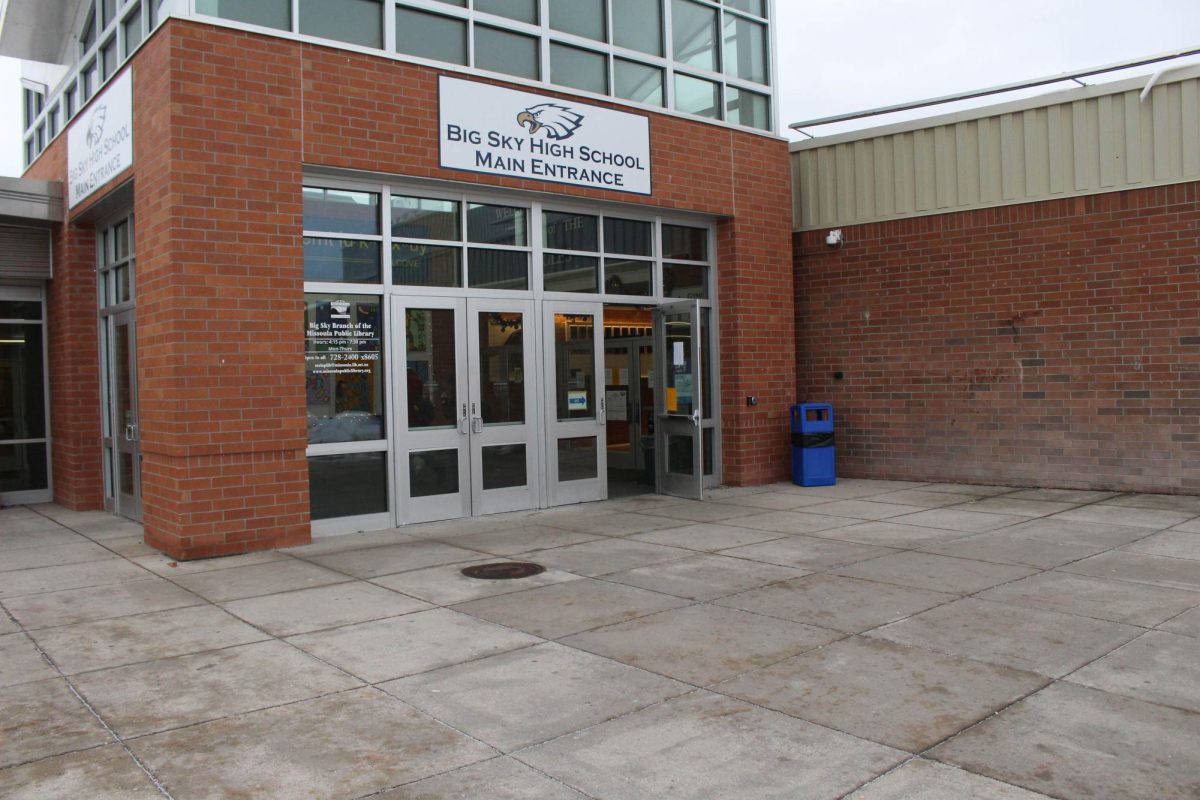
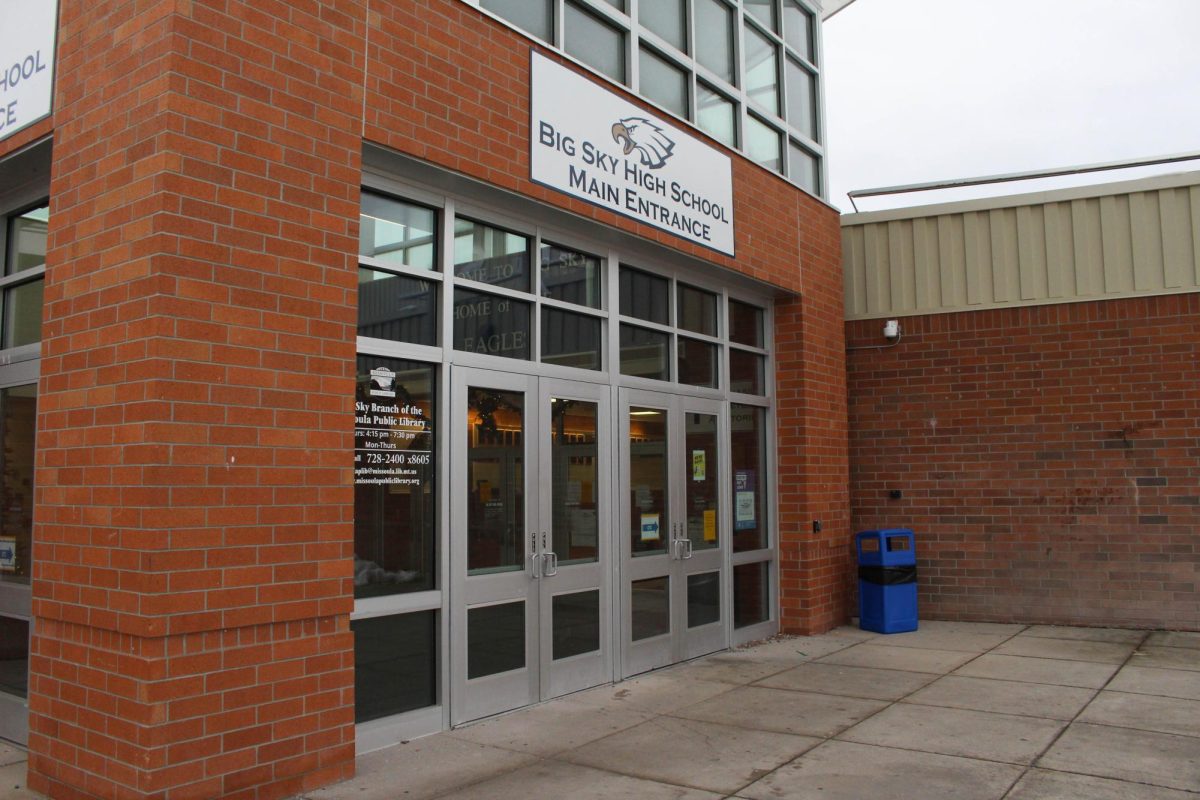
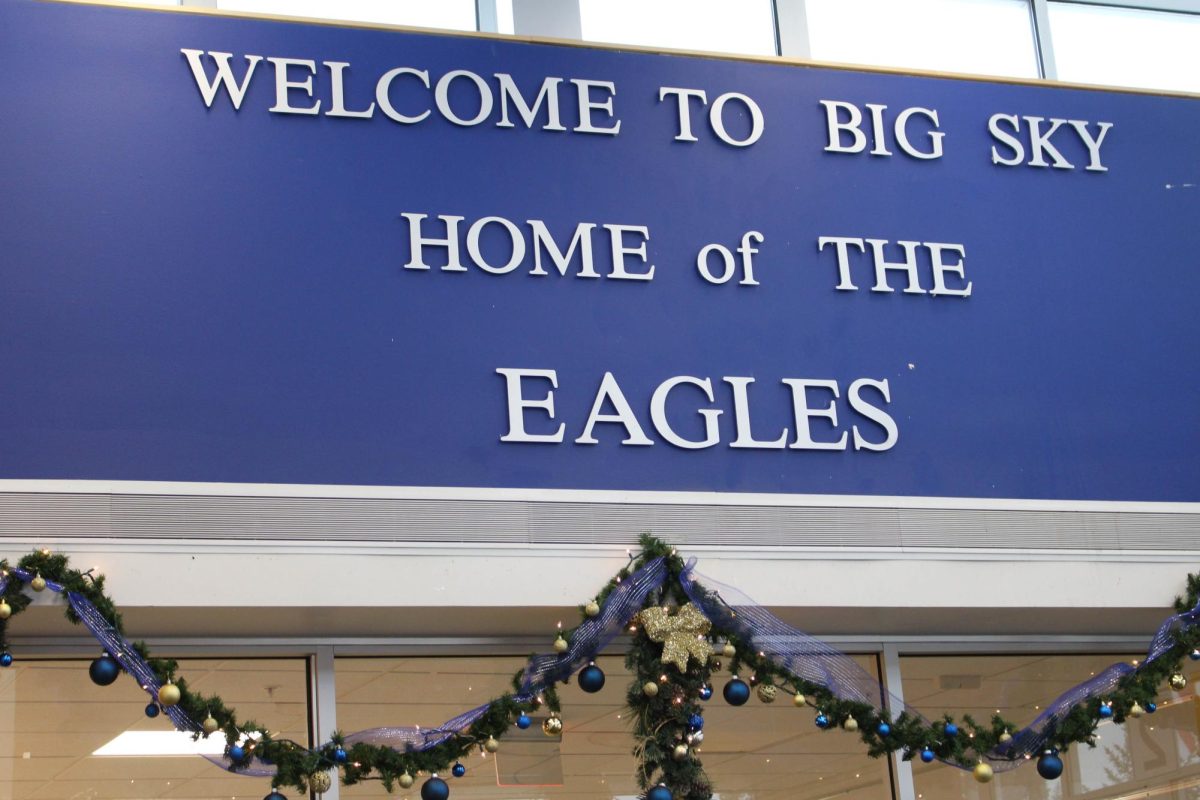
Stop, Drop, and Roll. Duck and Cover. Lock, Lights, and Out of Sight. These are all common phrases and scenarios students across the U.S. have heard when learning about safety and emergency response at school. Big Sky High School is one of many schools that maintains established emergency procedures designed to promote student and staff safety through coordinated communication.
And compared to the other high schools in Missoula, Big Sky High School principal Jennifer Courtney says the Eagles stand out.
“We are pretty far alone compared to other schools in these procedures,” Courtney said, referring to Big Sky’s comprehensive, well-practiced emergency response procedures that prioritize student and staff safety. She also mentioned how in recent years there has been quite a shift, where Big Sky now has to conduct multiple drills these days compared to only a couple back in 2016.
Courtney also mentioned how the teachers and staff like seeing students come into a safe building with nothing to worry about, watching them succeed in their classes and graduate.
“I love being part of a community that is kind and watching our students thrive in everything that they do,” Courtney said.
However, Big Sky and other public schools being considered fully safe environments was only the case nine years ago. Today, you can’t walk into a school and feel completely safe anymore, as gun violence in U.S. schools is the new normal. According to an article by the American College of Surgeons (ACS), studies show that from 1970 to 2025 about 2,056 school shootings were reported. The article’s key findings say how back in 1970 only a total report of 20 gun-related incidents happened, but in 2021, 251 incidents were reported.
The ACS key findings also noted that two thirds of the reported shooters were under the age of 17, and that from 1970-2025 the rate of children being school shooting victims more than quadrupled from 0.49 to 2.21 per 1 million population.
While there have not been any active shooter events at Big Sky High School, in 2017, according to NBC Montana News, there was a report that a student brought a gun to school. The17-year-old student, who was on probation, tried to run away from the school resource officer at the time when confronted and almost hit the officer with his car, leading the officer to fire his gun at the vehicle. No one was injured and the student was arrested after a short high speed chase, the news report says.
When asked about it recently, assistant principal Sabrina Beed, who was at Big Sky at the time, said, “This event left all of us surprised because we didn’t expect a kid to do something like that.”
So what specific procedures does Big Sky High School have in place to keep incidents like the one in 2017 from happening again? Big Sky School Resource Officer Christian Cameron said that the school follows a protocol called, “I Love You Guys.” Summarized neatly on a sheet displayed in rooms around the school, the “I Love You Guys” approach helps staff and students deal with various emergencies, whether it’s an unknown threat in the building or a kid having a personal medical emergency.
“When we have a hold, lockdown, or weather event, we follow what the protocol says to help us,” Cameron said of “I Love You Guys.”
But “I Love You Guys” isn’t just a piece of paper; according to the foundation’s website, roughly 50,000 high schools in the U.S use this protocol, making it one of the most common emergency response frameworks used in American schools. The foundation was created by Ellen and John Micheal Keyes in 2006, not just because they aimed to “restore and protect the joy of youth,” they said, but also in remembrance of their daughter Emily, who died in 2006 due to being held hostage in a school shooting. Her last text message she sent out to her parents was, “I love you guys,” which became the foundation’s name.
Another way Big Sky ensures it is prepared for emergencies is through its crisis team. Jack Young, the Big Sky vice principal who oversees school safety, said the school has a crisis team made up of teachers, secretarial staff and paraprofessionals that meets once a month. During each 30-minute meeting, the team brings up a random emergency scenario and talks about how the school should deal with it.
When asked about what emergency scenarios Big Sky deals with most, Cameron and Young mentioned two recurring incidents.
The first common incident the school faces is students having personal medical issues, like a seizure, in the hallway or other areas of the school. Young and Cameron said for seizures specifically, school officials close the section of the hallway the kid is in for space, then they have a couple of staff members and sometimes the nurse monitors the student’s breathing and responsiveness.
The second common incident the school faces is when a student overdoses on a substance, or is under the influence of a substance. When a student is identified as being under the influence, Young and Cameron said staff first stays with the kid and keeps them safe, then often takes them to the nurse so they can assess their level of consciousness, breathing, skin color, and pupils. The administrators said Narcan,a life saving medication that reverses an opioid overdose, is only given to a student if they took fentanyl, heroin, or too many painkillers, and then they are rushed to hospital for treatment. Students who are under the influence of alcohol or nicotine are also sent to the hospital for treatment, but no Narcan is needed.
Young could not give us an exact number of times Big Sky staff faces these scenarios, but estimated that there are a few of these incidents a month.
When asked about Narcan specifically, Young couldn’t share due to student privacy.
“You can’t be scared, you have to act quickly,” Young said, talking about the incidents Big Sky staff face.
Another thing Young mentioned is that by Montana state law, all high schools need to conduct eight emergency drills throughout the year. According to this law, MCA 20-1-402, ”drills must be held at different hours of the day or evening to avoid distinction between drills and actual disasters.”
Young mentioned that after every drill at Big Sky, teachers and staff are required to fill out a Google Form about how they think the drill went and what about the school’s response needs improvement.
“It’s nice seeing how our teachers and staff react to the drills,” Young said during a press briefing with the Sun Journal the morning of Jan. 13.“One thing I really want to see though is how our teachers react to a surprise drill.”
Luckily, his wish came true that afternoon. During the last period of the school day Jan. 13, Big Sky had a fire evacuation. The evacuation happened because of a student who accidentally left his popcorn in the microwave a little too long.
Young and Courtney said no injuries happened and nothing was burned to the ground. However, Courtney mentioned the evacuation was almost successful. She said an office attendant accidentally hit the lockdown button instead of the fire button, so kids and students were locked in their classroom, confused about what was happening, especially when the right button was pushed and both alarms were going off.
Courtney mentioned how Big Sky should start doing surprise drills consistently so an incident like that never happens again.
Through effective and consistent training, Big Sky administrators feel confident that the school will always do its best to protect its students and respond to emergencies.
“We come up with a game plan so when it’s for real, we can take action, head on,” Cameron said.