At the start of this 2025-26 school year, Big Sky opened its doors to not only new students, but eight new teachers.
Each teacher brings their own passion and experience to the classroom. From agriculture to history class, these new educators range from embarking on their first year teaching, to adding to 17 years of educator experience.
Big Sky adds roughly 12 new teachers every year, according to Big Sky Principal Jennifer Courtney. Courtney said that this year was “an odd” year for new teacher hires because not as many positions had needed to be filled.
Sabrina Beed, one of Big Sky’s assistant principals, agreed with Courtney, saying, “We only had a few new hires this year. In the past, we’ve had as many as nine to eleven new hires.”
Beed stated that this is a good thing for the school. “If you have teachers that stay, that leads to consistency across the board,” Beed said.
This year, Big Sky added two history teachers, a special education teacher, two agriculture teachers, two music teachers, and one English teacher, Courtney said.
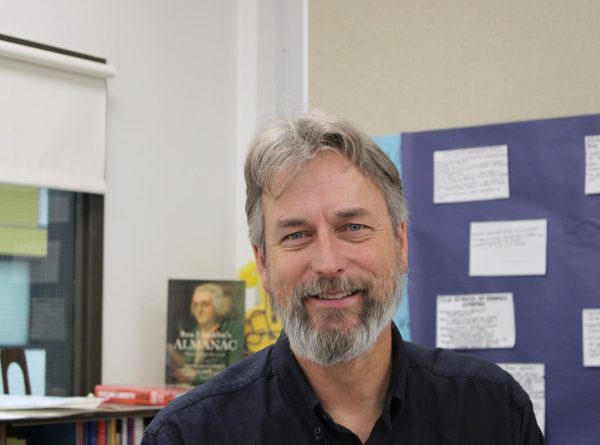
Big Sky’s new history teacher, Ross Chaney, has been teaching since 2001. Chaney grew up in Missoula, graduating in 1987 from Hellgate High School. In an interview with Chaney, he shared that he has taught abroad. Chaney’s last assignment was in Saudi Arabia, where he taught for 10 years. Before that, Chaney taught on the Lummi Indian Reservation in Washington state for seven years.
While in Saudi Arabia, Chaney was teaching at an English language school with a very diverse population. This includes kids from India, Pakistan, South Korea, South Africa, Spain, England, and Poland, he said.
Chaney’s main focus while in Saudi Arabia was teaching fifth grade language arts, with a class size ranging from 11-20 students. The school only taught up to eighth grade. After graduating middle school, students were then sent to boarding schools for their high school life, Chaney explained.
When asked how the climate differs from Missoula, Chaney was very clear that it’s a different world.
According to Chaney, the weather was terrible. He said the summertime was extremely hot.
“It was so bad, we would say the windows were crying. When you wake up in the morning, and if your house had air conditioning and it was hot and humid outside, then the windows would have gathered so much condensation,” Chaney said.
This wasn’t the only shock Chaney had to face. “There is a lot of culture shock when you first get there, and you’re living on a small compound, while being in a desert,” he said.
This took Chaney a while to get used to. “It’s a different kind of life, but once you get used to it, it was really pleasant,” Chaney said.
Chaney always knew he wanted to come back to Missoula, saying it’s where he wants his home and his future retirement place to be.
“I don’t know how many more years of teaching I still have in the tank. We’ll find out. But I do really enjoy being here. I really like my colleagues at Big Sky and what I’m teaching. So I’m in no hurry to leave,” Chaney said.
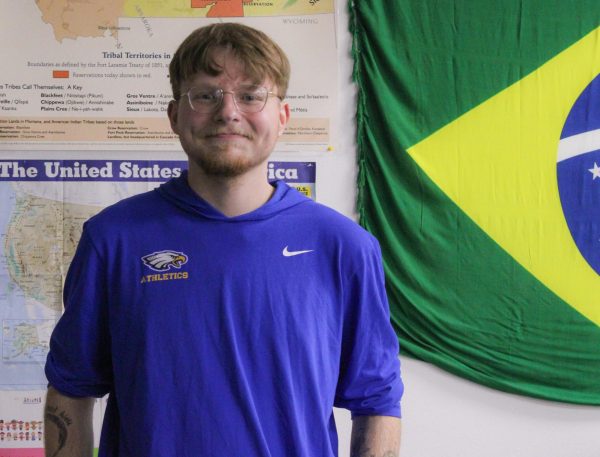
Zachery Rambur-Craig is Big Sky’s second new history teacher. He’s brand new to teaching, and was hired just a few days before school started.
Craig grew up in smalltown Baker, Montana, and went to school in Missoula at the University of Montana. Craig knew he wanted to go into a history teaching position for the love he has of the subject area.
In an interview with Craig, he said, “I feel like my job is to teach students why they should love history as well.”
He also talked about how he wants to make sure his classroom is as manageable as possible.
“Students have a lot going on in their lives, a lot of activities, a lot of other classes. So I just do what I can to be flexible in understanding what my students need,” Craig said.
When asked how the year is going so far, Craig said, “I love it. My classes are great, and it’s been awesome. I like to get my students involved in a lot of activities and overall it’s been a great environment.”
Craig said beyond grades, he tries to see how students interact with material and implement engaging projects to assess student learning. He referenced a debate he held in his history classes to help students exercise the content of their learning in class.
Among Chaney and Craig, other new teachers looking to make a difference have also been added to Big Sky’s staff this year. Shealyn Hafer, the new life skills teacher, is thrilled to be working at Big Sky High School, saying, “This is my dream job. I never thought I would or wanted to do anything different than this.”
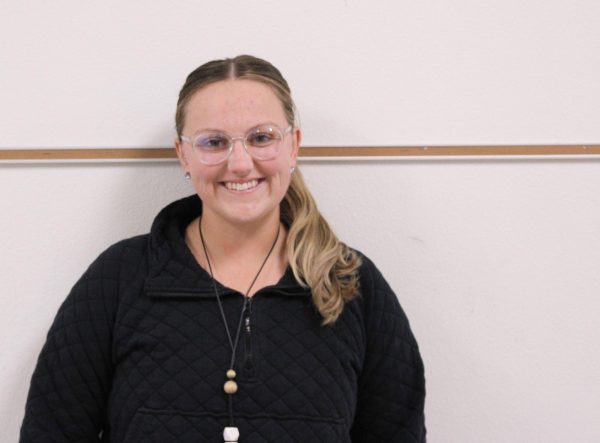
Hafer has been teaching for six years. She previously worked at Meadow Hill Middle School teaching eighth grade in the resource position.
“I got the opportunity to move here last year in the life skills position, and I was ready for a change. Something new, and so that’s why I moved to Big Sky,” Hafer said.
Hafer was inspired to teach special education from one of her childhood friendships with a boy who was autistic.
“From an early age, I was able to recognize that he was different from myself and our peers. And at that age, it’s really hard for kids to see and accept somebody who’s different,” said Hafer.
Hafer grew up with him through elementary school all the way through high school, and are still friends to this day.
Hafer always wanted to teach at the high school level. Hafer had taken the coaching role for the Big Sky golf team last year. After her first year of coaching, she really enjoyed the high school environment.
When asked about the transition, Hafer said, “It’s been really good. I really like my kids, and the staff has been super supportive.” She also talked about how the high school ‘vibe’ matches her personality.
A big goal Hafer has is to get kids coming to school and allowing them a place where they feel cared for.
When asked about her students, she said, “taking a positive attitude and bouncing back from challenges is a big win in my book.”
Hafer continued.
“My goal is to give them a safe and exciting place to be where they feel like they belong.”
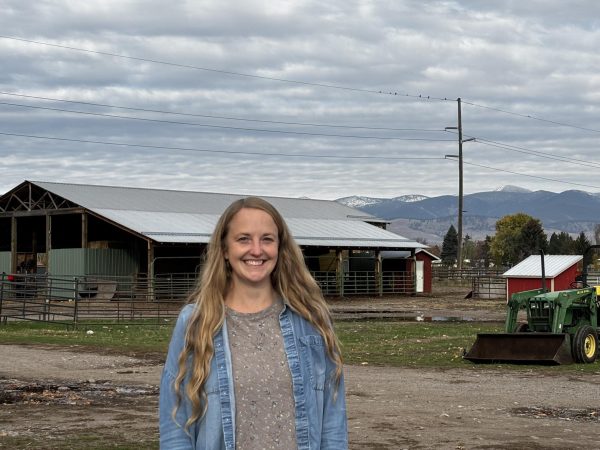
Hafer isn’t the only one looking to bring new perspectives and experiences to Big Sky. Two new agriculture teachers, Rachel Zermeno and Adelheid West, who goes by Heidi, are both a part of Big Sky’s agriculture program. With there being only one other program like it in the state, they felt drawn to Big Sky.
Zermeno had always had a connection to agriculture. She was involved in FFA in high school and her family raised pigs at home, from conception to consumption. “I’ve always had my foot in the door with agriculture,” Zermeno said.
Zermeno grew up in Northern California and moved to Montana to go to Montana State University before starting her teaching career at Big Sky. This year marks Zermeno’s first full-time teaching position. She was previously a student teacher in Corvallis.
When asked why you should take an agricultural class, Zermeno said, “I mean, you get to go outside every single day. You don’t have to be trapped in a classroom.” She continued on to talk about her gratitude for the outside classroom environment, and how excited she is to share her experiences so far with the Big Sky community.
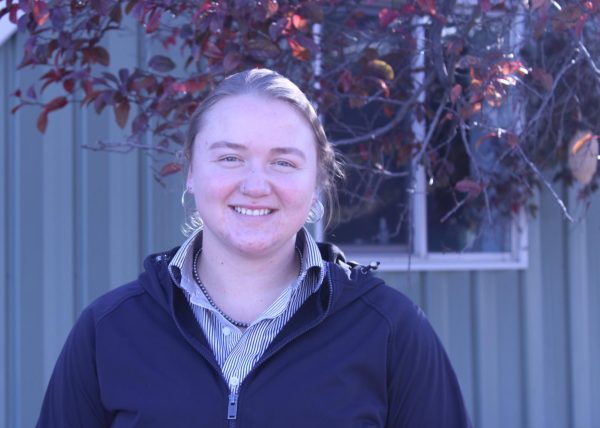
West is the second brand new agriculture teacher. Getting her teaching license just this past August, West has a wide education experience. As an undergraduate at Oklahoma State University, West majored in Studio Art and Political Science and minored in Horticulture and German. West also has a master’s degree in soil chemistry.
In an interview with West, she said, “I’ve always been interested in things like agroforestry, which is trying to grow crops and livestock with trees, and also community supported agriculture.”
She was drawn to Montana and Big Sky’s agriculture center, like Zermeno. When asked how she likes the community, West said, “I absolutely love it here. Some mornings moving water lines when the sun’s coming up, it’s just beautiful, the students are great, and all the administration is really lovely. Everybody is just great to work with.”
To make these new teachers feel welcome and ready to teach at Big Sky, it takes time and preparation, according to Beed.
¨I think that the integration of new staff really comes down to how well we prepare them before the school year starts, and developing relationships with them, while being open to any questions that they might have, or to just stop in and check on them,” Beed said.
Beed spoke on what it means to hire less teachers saying, “it means that you have strong veteran teachers and you have people that want to stay. All the reports from the new staff say that they are doing really well.” Beed wrapped up saying, “I believe everybody feels supported and is integrating and settling in very well.”